
By Subashri M
Proprietor, SNS Global TradersWhen Tata, PepsiCo and Britannia All Start Selling Millets, Something Big is Happening
I want to tell you about a shift that I think matters a lot if you are in the business of sourcing or selling food products globally.
In May 2026, Tata Soulfull launched a brand new millet muesli range built around three specific health goals: weight management, protein intake, and gut health. Their campaign is called Nourish Your Goals with Millets. Around the same time, PepsiCo has Kurkure Jowar Puffs on shelves across India. Britannia has millet bread. ITC has millet cookies under the Sunfeast brand. These are not small startups experimenting with a niche ingredient. These are some of the most powerful food companies in the world, and they have all decided that millet belongs in their core product portfolio.
When that happens, it is worth paying attention to why.
What these brands are responding to
Food companies this size do not move quickly. They test, research, reformulate and test again before anything reaches a shelf. So when Tata Soulfull reports over 35 percent revenue growth driven by its millet product lines, and then doubles down with a new product launch, it tells you something very specific.
The consumer demand for millet-based food is not a moment. It is a sustained, growing preference that has now crossed the threshold from health food niche into mainstream grocery aisle.
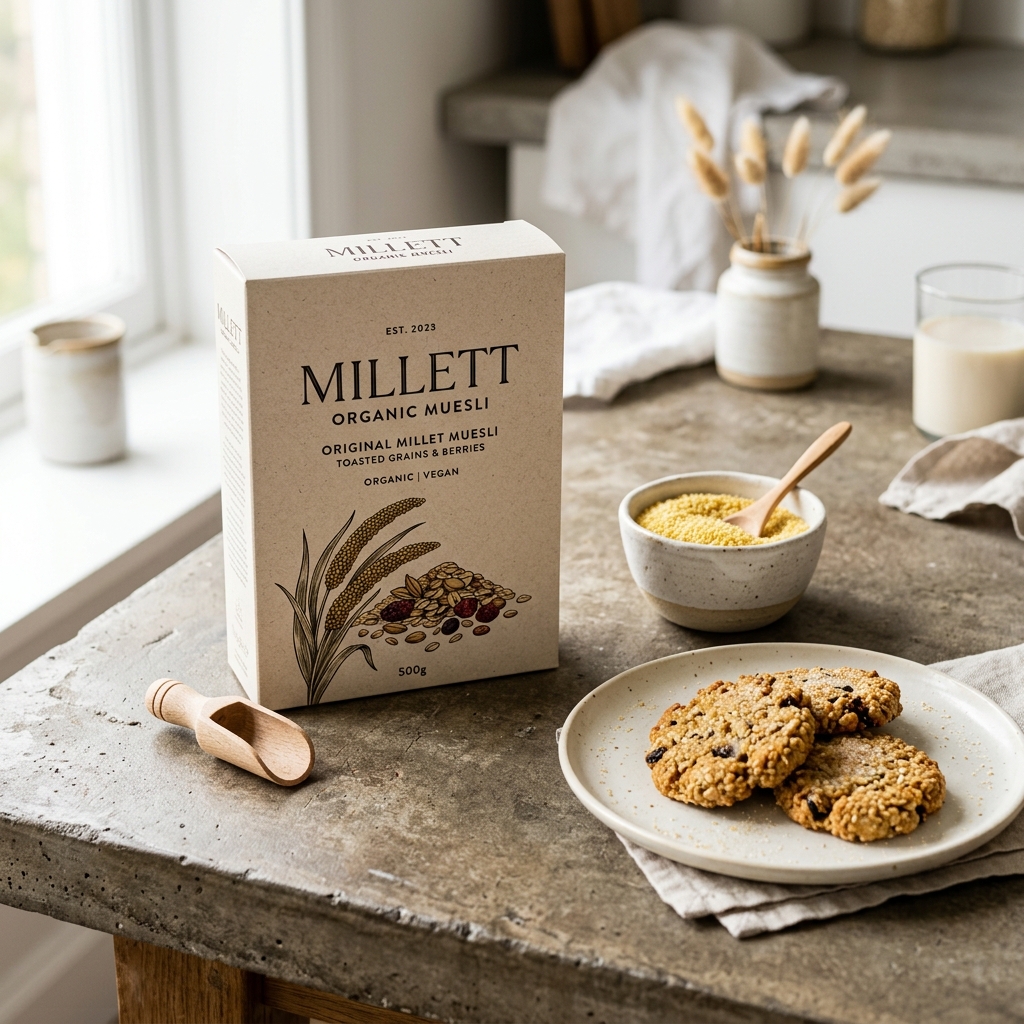
More than 1.2 billion people worldwide consume millet-based foods each year. Millets contain significantly more dietary fibre than refined grains and offer higher protein bioavailability, which is exactly what urban consumers globally are looking for right now. The market for millet-based packaged food is projected to nearly double from USD 52 million in 2025 to over USD 104 million by 2032. That growth does not happen without a very strong raw material supply chain behind it.
That supply chain starts with Indian farmers and ends with exporters like us.
Why this matters for international buyers
Here is the connection I want to make clear for anyone reading this who sources food ingredients globally.
Every millet cookie, millet muesli, millet puff, and millet bread that a major food brand launches needs raw grain behind it. Consistent, clean, traceable raw grain. As large FMCG conglomerates actively incorporate millet ingredients into conventional bakery items, breakfast cereals, and snacks, they are elevating the category from a niche health segment to mass-market retail shelves. As that happens, procurement teams at these companies and the international brands watching them are all asking the same question: where is our supply coming from and is it reliable?
India is the answer to that question. Global millet production is expected to surpass 42 million metric tons in 2026, with international bulk pricing ranging between USD 280 and 430 per metric ton depending on processing grade and export origin. India leads global millet production by a very large margin, grows multiple varieties year-round, and has an established export infrastructure with proper documentation, certifications, and quality controls in place.
The nutraceutical angle nobody is talking about enough
Beyond food brands, there is another buyer category that is quietly growing very fast right now.
Nutraceutical producers are utilizing millet in protein powders, fortified beverages, and digestive health supplements due to its mineral-rich composition and low glycemic index. The health-focused millet product segment is estimated to contribute nearly 30 percent of value-added market demand in 2026.
If you are building products for the wellness, sports nutrition, or functional supplement space, millet deserves a serious look as a base ingredient. It is naturally gluten-free, digests slowly, and carries an iron, magnesium, and calcium profile that works across a wide range of formulation types. The fact that major brands are already normalizing millet on grocery shelves makes it easier to sell millet-based supplements and nutraceuticals to a consumer who already recognizes the ingredient.
What this means if you are sourcing right now
The window between a trend and a commodity price spike is usually shorter than people expect. When large food companies move into a category, procurement competition for quality raw material increases. We are at the beginning of that curve for millets, not the middle of it.
At SNS Global Traders, we export the full range of Indian millets including Finger Millet, Pearl Millet, Foxtail Millet, Kodo Millet, Barnyard Millet, and Browntop Millet. All machine-cleaned, sortex processed, APEDA certified, and packed to your specification. Whether you are a food manufacturer, brand owner, or ingredient distributor, we can work with your volume and packaging requirements.
If the movement happening in this category has you thinking about your own supply chain, I would be happy to talk.
Reach out through our contact page. We respond to every inquiry personally.